Ask a foreign visitor about Isan (อีสาน) and you’ll usually get a blank look. Ask a Thai person and you’ll get a strong opinion, usually about the food.
Isan is the northeastern third of Thailand — twenty provinces, a third of the country’s population, and something like two percent of its foreign visitors. It’s rice fields and river towns, thousand-year-old Khmer temples with nobody at them, and the source of half the dishes you think of as Thai food.
If you’ve done Bangkok and the islands and want to know what the rest of the country is like, this is the answer.
Why Isan is different
Isan sits on the Khorat Plateau, higher and drier than central Thailand, bounded by the Mekong to the north and east and Cambodia to the south. That geography shaped everything.
The culture leans Lao, not Bangkok. The Isan language is closer to Lao than to central Thai. The music — mor lam, driven by the khaen bamboo mouth organ — sounds nothing like Bangkok pop. The food is hotter, more sour, more fermented, and eaten with sticky rice by hand.
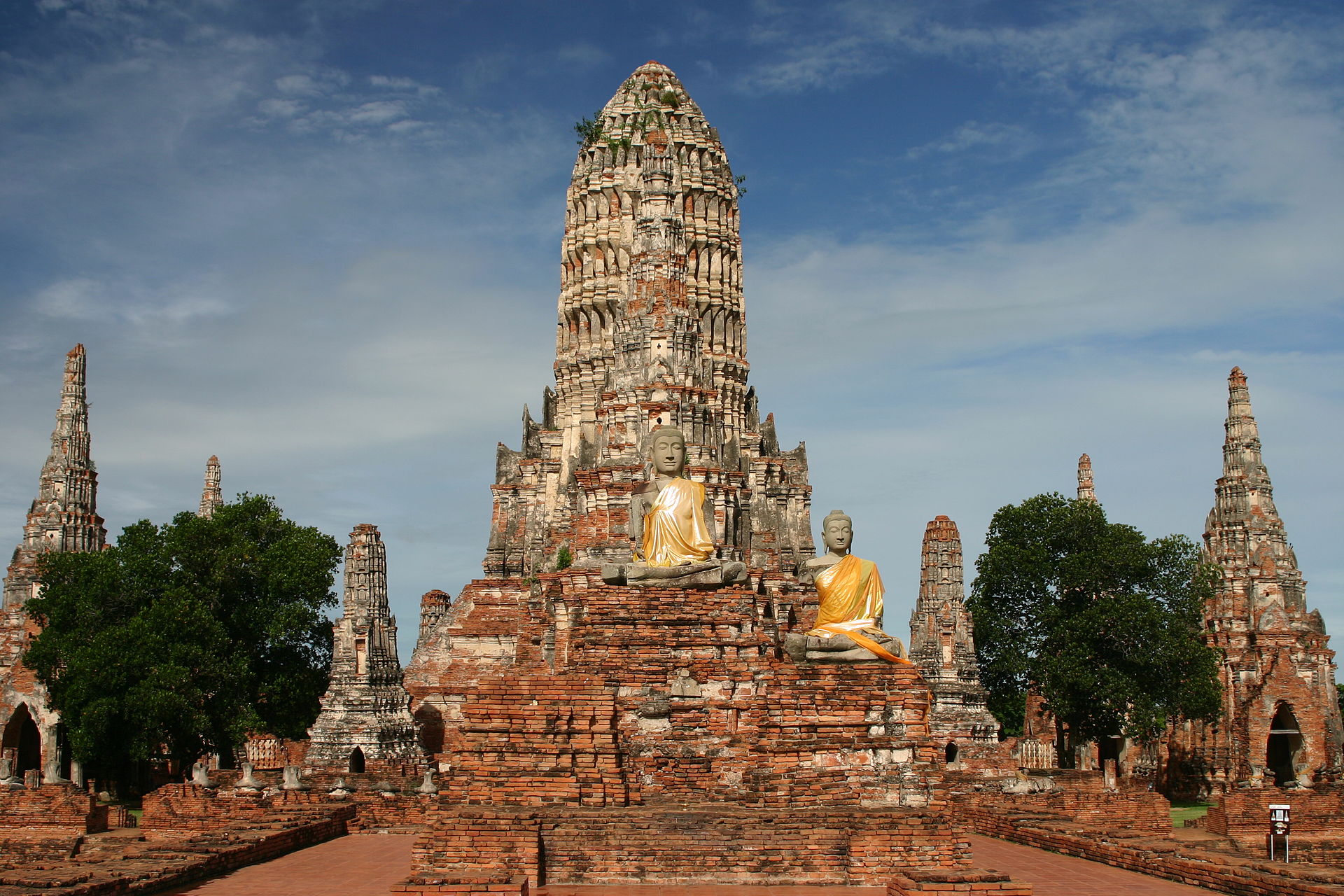
The history leans Khmer. For centuries this was the northwestern edge of the Angkor empire, which is why there are Khmer temples here contemporary with Angkor Wat itself — built of the same pink sandstone, by the same civilisation, and visited by roughly nobody.
And it’s cheap. Not backpacker-cheap; genuinely, structurally cheaper. A good meal is ฿60. A decent hotel is ฿700. You are not being quoted a tourist price because there is no tourist price.
The highlights
Phanom Rung — Isan’s Angkor
An 11th-century Khmer temple on the rim of an extinct volcano in Buriram province, approached along a 160-metre processional walkway. It is genuinely magnificent, beautifully restored, and you will share it with a handful of Thai visitors.
Four times a year — around early April and early September — the rising or setting sun aligns perfectly through all fifteen doorways of the sanctuary. Those dates draw a crowd; every other day of the year does not.
Combine it with Muang Tam, a smaller, older, more atmospheric Khmer temple ten minutes down the road with lily-filled reservoirs at each corner.
Sam Phan Bok — the Grand Canyon of Thailand
A vast field of rock on the Mekong in Ubon Ratchathani, sculpted into thousands of potholes and channels by the current. The name means “three thousand holes”.
Timing is everything here. It’s only exposed in the dry season, roughly January to May — the rest of the year it’s underwater. Go at sunrise or sunset when the rock turns gold.
Khao Yai National Park — the gateway
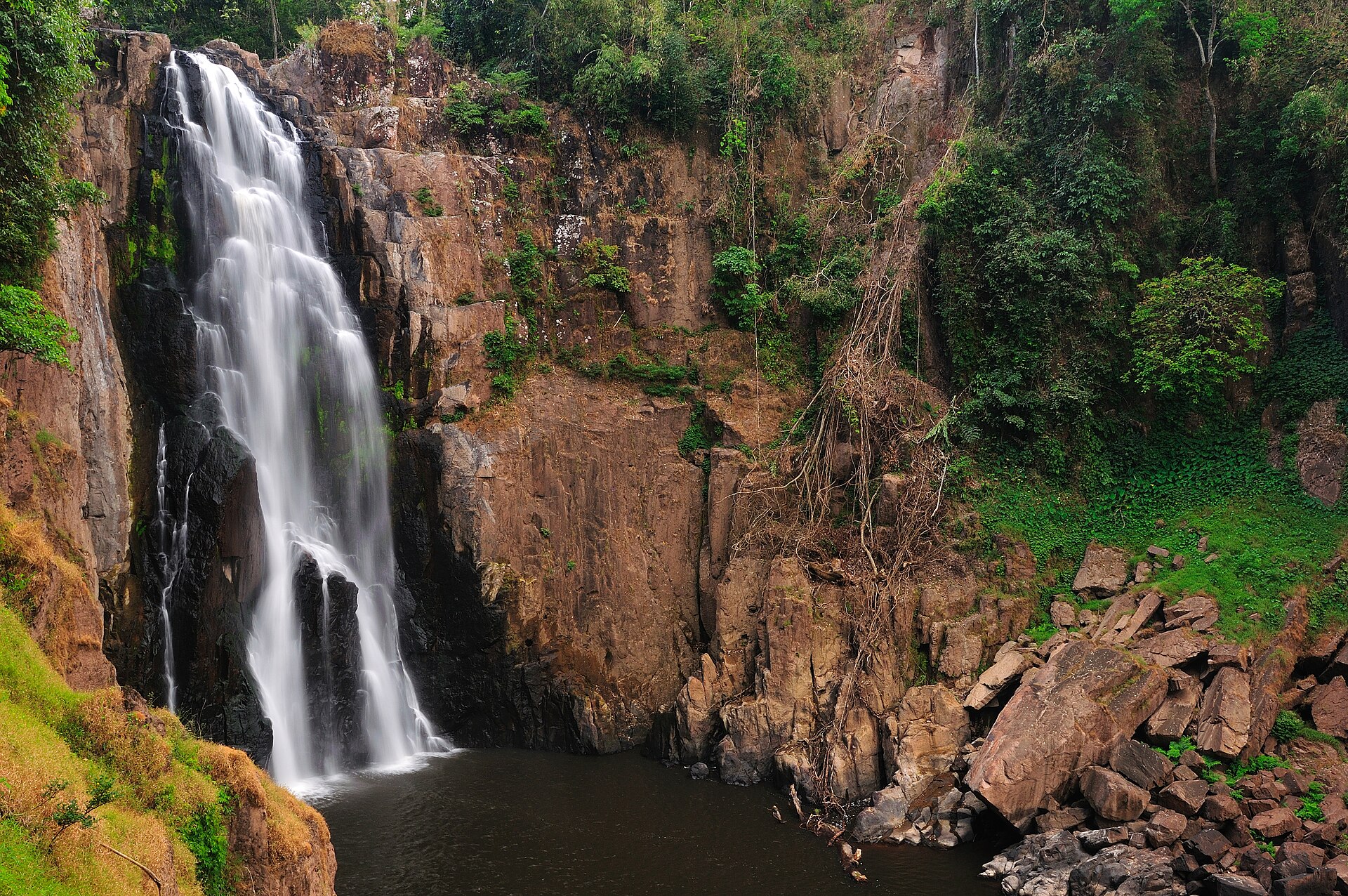
Technically on Isan’s doorstep rather than in it, and the easiest introduction: jungle, waterfalls, hornbills, gibbons, wild elephants, and a fringe of vineyards and excellent cafés. Two and a half hours from Bangkok, which makes it the natural first stop on an Isan loop.
The Mekong river towns
Nong Khai, Nakhon Phanom, Chiang Khan and Mukdahan string along the river facing Laos. Chiang Khan in particular — a preserved street of old wooden shophouses along the water — has become a beloved domestic weekend destination and remains almost unknown to foreigners. Sunrise over the Mekong with monks on their alms round is the image most people take home.
Ubon Ratchathani and the Candle Festival
Isan’s eastern hub, and home to one of Thailand’s most extraordinary festivals: in July, at the start of Buddhist Lent, enormous sculpted beeswax candles — some the size of a bus, carved over months — are paraded through the city.
The food
This is the reason many Thai people go to Isan, and it should be a reason you do.
Som tam — green papaya pounded in a clay mortar with lime, fish sauce, chilli, garlic, tomato and long beans. In Bangkok it’s adjusted for the audience. In Isan it will genuinely hurt, and it’s better.
Larb — minced meat tossed with lime, fish sauce, chilli, mint and toasted ground rice, which is what gives it that nutty texture.
Gai yang — chicken marinated and grilled slowly over charcoal, eaten with sticky rice and a fiery jaew dipping sauce.
Sticky rice — eaten by hand, rolled into a ball, used to pick up everything else. It comes in a woven basket and it’s the centre of the meal, not a side.
Also worth trying: sai krok Isan (fermented sour pork sausage), nam tok (grilled beef salad), tom saep (a hot-and-sour soup that will clear your head), and — if you’re brave — the fermented fish sauce pla ra, which is the load-bearing ingredient in real Isan cooking and an acquired taste for everyone including many Thais.
A five-day Isan loop
This is roughly what we build for people who want a proper introduction.
Day 1 — Bangkok → Khao Yai (2.5 hrs). Afternoon in the park: Haew Suwat and Haew Narok waterfalls, a viewpoint at dusk when the wildlife moves. Night at a lodge on the park fringe.
Day 2 — Dawn wildlife drive. Late morning to Nakhon Ratchasima (Korat) (1.5 hrs), then on to Phimai — another major Khmer temple, and the road-connected sibling of Angkor. Night in Korat or Buriram.
Day 3 — Phanom Rung at opening, before the heat (2 hrs). Muang Tam afterwards. Afternoon at a silk-weaving village. Night in Buriram or Surin.
Day 4 — East to Ubon Ratchathani (3 hrs). Wat Sirindhorn Wararam, the “glowing temple”, after dark. Or push north to the Mekong.
Day 5 — Sam Phan Bok at sunrise if the season is right, then the Mekong at Khong Chiam where the Mun river meets it — the “two-coloured river”. Fly home from Ubon, or drive back.
Distances are real here. Isan is about the size of England, and these hops are two to three hours each. This is not a region for buses.
What to know before you go
- When to go: November to February. Isan in April is one of the hottest places in Southeast Asia — over 40°C is normal, and it doesn’t cool at night.
- English is scarce. Outside hotels in the bigger cities, very little. People are warm about it; bring a translation app.
- ATMs are fine, cards are not. Many restaurants and all markets are cash-only.
- Ordering food: “mai phet” means “not spicy”. Say it. They will still make it spicier than you expect, and that’s the reduced version.
- Dress modestly at temples — these are active religious sites, not ruins with ticket booths.
- Getting there: fly to Ubon Ratchathani, Udon Thani, Khon Kaen or Buriram (about an hour from Bangkok, often under ฿1,500), or drive. The train to Nong Khai is slow and lovely.
Who Isan is for
Go if you’ve been to Thailand before, you care more about food and history than beaches, you’re comfortable being the only foreigner in the room, or you want to spend a fraction of what the tourist trail costs.
Don’t go if it’s your first trip and you want beaches and easy logistics, you need English everywhere, or you’re travelling in April and dislike heat.
Isan’s sights are spread across long distances with very little local transport, and almost no English on the ground. It is the single region of Thailand where a private driver changes the trip most — and where we most enjoy taking people, because almost nobody asks.
Ask us to plan your Isan trip → · Tailor-made tours → · Van and driver hire →