Thailand is easy to travel around and easy to travel around badly. The country runs on cheap domestic flights, an excellent urban rail network, a slow and charming national railway, and a lot of pickup trucks with benches in the back.
Here’s what each option actually costs, how long it takes, and when to use it.
The rule of thumb
- Over 400km (Bangkok ↔ Chiang Mai / Phuket) → fly
- 100–400km (Bangkok ↔ Hua Hin / Pattaya / Ayutthaya) → train, bus or private car
- Inside a city → BTS/MRT in Bangkok, Grab elsewhere
- A day with several stops → private car with driver
- Islands → ferry, then accept the taxi prices
Domestic flights
฿800–2,500 · 1–1.5 hrs · book ahead
Thailand’s domestic aviation market is competitive and genuinely cheap. Thai AirAsia, Nok Air, Thai Lion, Thai Vietjet and Bangkok Airways cover everywhere you’d want to go.
Use for: Bangkok ↔ Chiang Mai, Chiang Rai, Phuket, Krabi, Koh Samui (via Surat Thani if you want cheap), Udon Thani, Ubon Ratchathani.
Watch out: Low-cost carriers mostly use Don Mueang (DMK), not Suvarnabhumi. If you’re connecting from an international flight, allow four hours minimum between airports — they’re on opposite sides of Bangkok. Baggage is extra and cheaper bought online than at the airport.
Trains
฿20–1,500 · slow · atmospheric
The State Railway of Thailand is not fast. It is cheap, safe, scenic and one of the more pleasant ways to see the country if you have the time.
The one to do: the overnight sleeper to Chiang Mai. Book a second-class air-conditioned sleeper, get the lower bunk, wake up in the mountains. It’s a proper experience rather than merely transport.
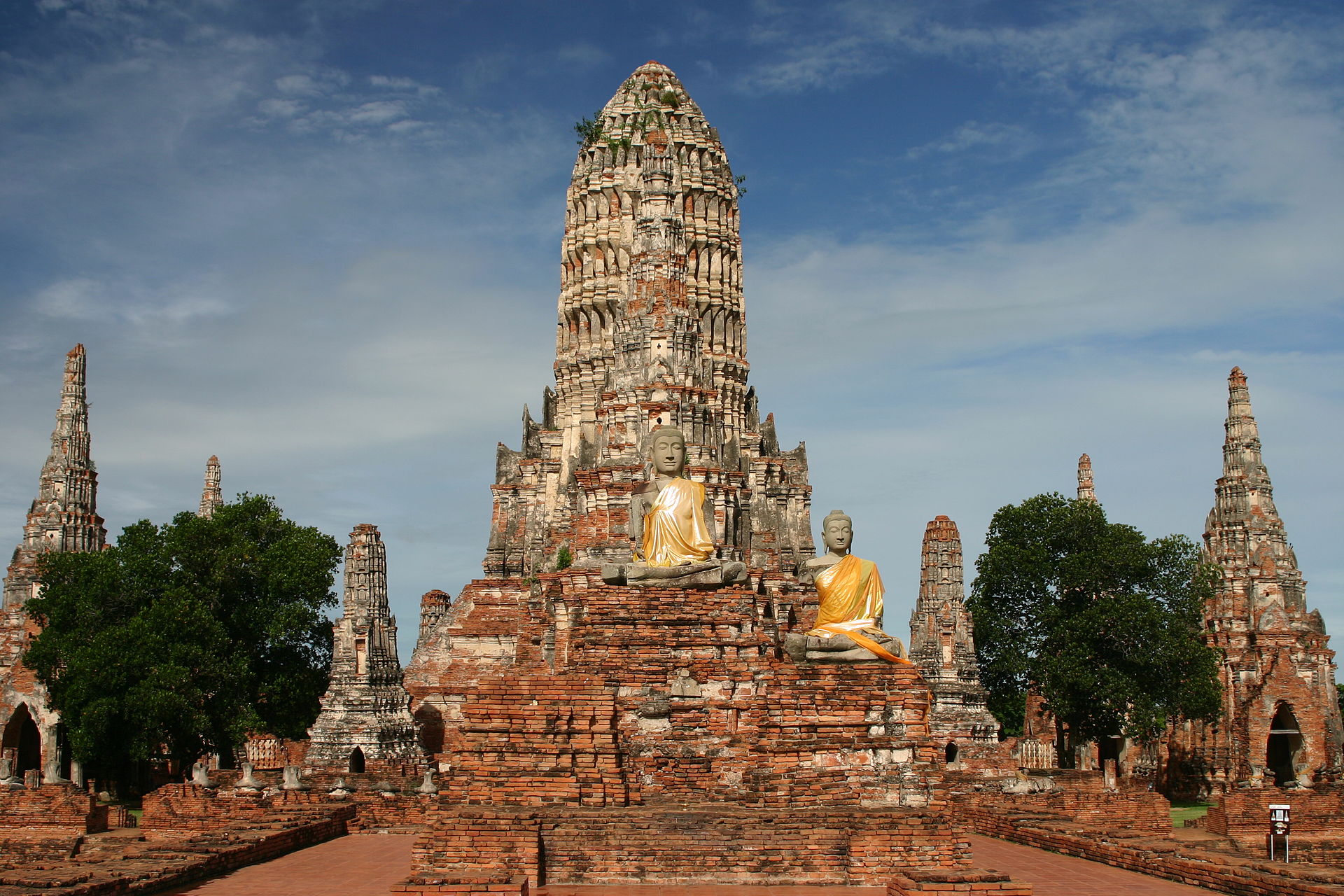
The practical one: Bangkok → Ayutthaya, ฿20–300 and about 90 minutes. Cheerful and cheap, though the station is across the river from the ruins.
Watch out: Delays of an hour or more are routine and nobody is embarrassed about it. Never connect a train to a same-day flight.
Buses and minivans
฿150–900 · 2–12 hrs · frequent
Long-distance buses are frequent, cheap and better than their reputation — government VIP coaches have proper reclining seats and are perfectly comfortable.
Minivans are the workhorse for shorter provincial routes: fast, cramped, and driven with commitment. Fine for two hours, wearing for five.
Watch out: Bangkok’s bus terminals (Mo Chit, Ekkamai, Southern) are themselves 30–60 minutes across the city, which erodes the time saving on shorter routes. And book tourist-route buses through your hotel or a proper operator rather than a Khao San Road shopfront.
City transport in Bangkok
BTS Skytrain and MRT metro — ฿17–62 · the correct answer
Bangkok’s traffic is genuinely among the worst anywhere. The elevated BTS and underground MRT skip it entirely, run every few minutes, are air-conditioned and cost almost nothing. Choose a hotel near a station and it will improve your trip more than any other single decision.
Chao Phraya express boats — ฿16–30. The orange-flag boat runs up and down the river and is the fastest, breeziest way to reach the Old City temples.
Taxis — ฿35 flag, ฿150–300 typical. Insist on the meter (“meter, please”). If the driver refuses, get out; there’ll be another in thirty seconds.
Grab / Bolt — ฿120–400. Price fixed in the app, no negotiation, no language issue. Excellent in Bangkok. Surge pricing in the rain, which in Bangkok means “often”.
Tuk-tuks — ฿100–300, negotiated. Slower and more expensive than a taxi and part of the experience. Agree the price first. Politely decline any offer to visit a “special government gem shop”.
Motorbike taxis — ฿20–100. The orange-vested riders at every soi entrance. Unbeatable for short hops through jammed traffic. No helmet is often offered; ask for one.
Songthaews and local transport
฿10–50 · everywhere outside Bangkok
Pickup trucks with two benches in the back, running fixed routes in most provincial towns and Chiang Mai. Flag one down, tell the driver where you’re going, press the buzzer when you want out, pay at the end. Cheap, hot, sociable, and the local way to move.
Scooters
฿200–350 per day
Ubiquitous on islands and in the north, and the freedom is real. So are the risks.
Be honest with yourself. Thailand has one of the highest road-fatality rates in the world and a large share involves motorbikes. If you haven’t ridden before, a Thai island is a bad place to learn.
Also: you legally need a motorcycle licence or an International Driving Permit covering motorcycles. Most travel insurance will not pay out if you don’t have one — this catches people out constantly and hospital bills after a scooter accident are not small. Wear the helmet. Never hand over your passport as a deposit; leave a cash deposit or a photocopy instead.
Rental cars
฿900–2,000 per day plus fuel
Cheap, and the major international rental companies operate at all the big airports. Thai roads outside cities are good.
But: driving is on the left, urban traffic follows conventions that take getting used to, motorbikes appear from every direction, and being a foreign driver in an accident is a genuinely difficult position regardless of fault. An International Driving Permit is legally required and insurers will ask for it.
For most visitors, a car with a driver costs about the same and removes all of it.
Private car and driver
฿900–1,500 for a transfer · ฿3,000–4,500 for a full day
You hire the vehicle, not a seat — so the price is identical for two people or eight, which makes it progressively better value the larger your group.
Worth it for: airport runs, day trips with several stops, anywhere with luggage, national parks, Isan and anywhere else public transport serves badly, travelling with kids or elderly parents, or simply a day where you’d rather not solve problems.
Not worth it for: one or two people on a straight city hop, or anywhere the BTS goes.
Full prices and routes → · Bangkok airport transfers →
Ferries and boats
฿300–1,800 · 30 min – 2.5 hrs
The only way to most islands. Standard ferries are cheap and slow; speedboats are roughly double the price and half the time, and considerably rougher.
Watch out: cancellations for weather are common in the low season, and there is no compensation culture around it. Never plan a same-day boat-to-flight connection between May and October on the Andaman side, or October to December on the Gulf side. Island-hopping guide →
Cost comparison: Bangkok to Chiang Mai
| Method | Cost | Time | Verdict |
|---|---|---|---|
| Flight | ฿1,000–1,800 | 70 min | Do this |
| Sleeper train | ฿800–1,500 | 12 hrs | Do this once, for fun |
| VIP bus | ฿600–900 | 9–10 hrs | Only if flights are sold out |
| Private car | ฿12,000+ | 9 hrs | No |
Six things worth knowing
- Check which Bangkok airport. BKK and DMK are an hour apart on opposite sides of the city. This ruins more connections than anything else.
- Carry cash in small notes. Songthaews, motorbike taxis and market stalls won’t break a ฿1,000 note.
- Get a tourist SIM at the airport. Grab, maps and translation all depend on it, and it’s about ฿300 for a fortnight.
- Rush hour is 7–9am and 4–7pm. A 20-minute drive becomes 70. Plan around it or take the train.
- Island taxi prices are fixed and non-negotiable. Not a scam, but genuinely expensive — factor it in when choosing where to stay.
- Build in buffer before flights. Traffic, ferries and Thai trains are all comfortably capable of losing you an hour.
Not sure which combination fits your route? Tell us where you’re going and we’ll map it out — including the legs where we’d tell you to take the train instead of hiring us.
Ask us to plan your route → · Van and driver prices → · Budget calculator →