When the Mekong drops in the dry season, it reveals one of Thailand’s strangest landscapes.
Sam Phan Bok — “three thousand holes” — is a stretch of exposed riverbed where the current has drilled the sandstone into a vast maze of smooth potholes, swirled channels and shallow canyons. Some basins are the size of a bowl; some are deep enough to climb into. Locals have named the ones that look like things: the heart, the Mickey Mouse, the fish.
It’s earned the nickname “the Grand Canyon of Thailand”, which oversells the scale and undersells how odd it is to walk across.
The critical detail
It only exists from about January to April.
For the rest of the year it’s under several metres of river. This catches people out, and there’s no partial version — either the rock is exposed or it isn’t. Late January through March is the reliable window; by May the water is usually returning.
What to do there
Walk the rock. There’s no marked path and no entry fee. Local guides with small carts wait at the access point and will run you out across the riverbed for a few hundred baht, which is worth it — the good formations are spread out and the stone gets very hot.
Take a longtail boat. Local boats run along the Mekong past cliffs, sandbars and Laos on the far bank. ฿300–600 depending on length and negotiation.
Come at sunrise or sunset. This is the whole reason photographers make the journey. Low light across wet, swirled stone with the river beyond it is genuinely spectacular, and the middle of the day is flat, glaring and 38°C.
What’s nearby
Khong Chiam — An hour south, where the Mun river meets the Mekong. The two rivers carry different sediment and run visibly side by side in different colours for some distance — the “two-coloured river”. Best seen from a boat.
Pha Taem National Park — Cliffs above the Mekong with 3,000-year-old rock paintings of fish, hands and rice baskets, and a clifftop viewpoint that is one of the first places in Thailand to see the sunrise, looking across the river into Laos.
Wat Sirindhorn Wararam (Wat Phu Prao) — The “glowing temple”. Its rear wall is painted with a phosphorescent Bodhi tree design that lights up after dark. Genuinely striking, and about 90 minutes away.
Practical notes
- This is deep rural Isan. Almost no English, few facilities, and very few foreign visitors — which is the point.
- It’s hot and there’s no shade. Bring water, a hat and sun protection. March and April on exposed rock beside a river is serious heat.
- Fly to Ubon Ratchathani. About an hour from Bangkok and often under ฿1,500, versus a ten-hour drive.
- You need a car. There’s no useful public transport to the site.
Where it fits
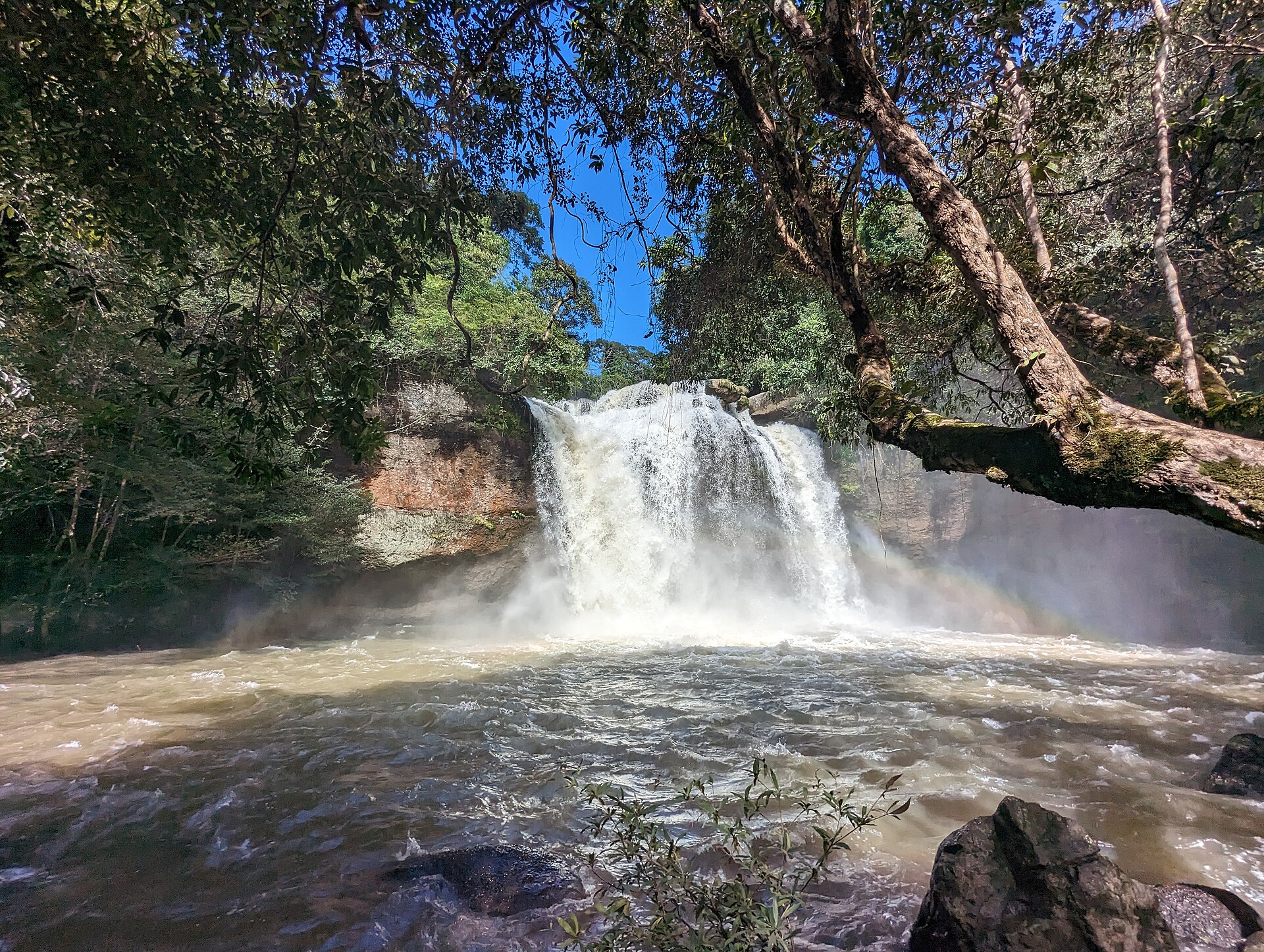
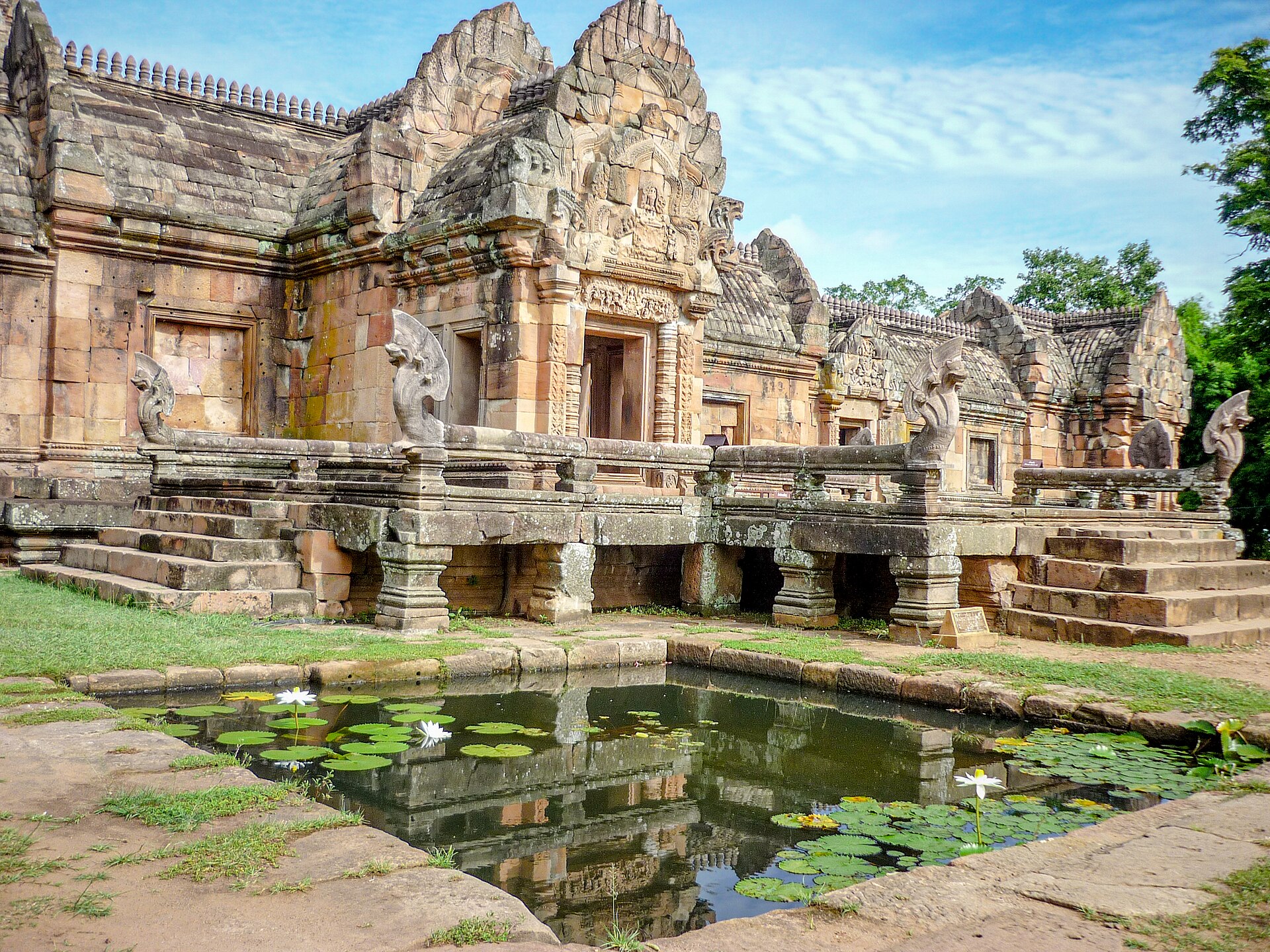
Sam Phan Bok belongs in a wider Isan itinerary rather than as a destination in itself: Khao Yai → Phanom Rung → Ubon Ratchathani → Sam Phan Bok and the Mekong. In the right season, that’s one of the most interesting weeks available in Thailand.
Make it easy
This corner of the country rewards local knowledge — the right season, the right time of day, and a driver who knows which access point to use. We arrange the route, the boat and the timing.
Tailor-made tours → · Van and driver hire → · Plan your Sam Phan Bok trip →