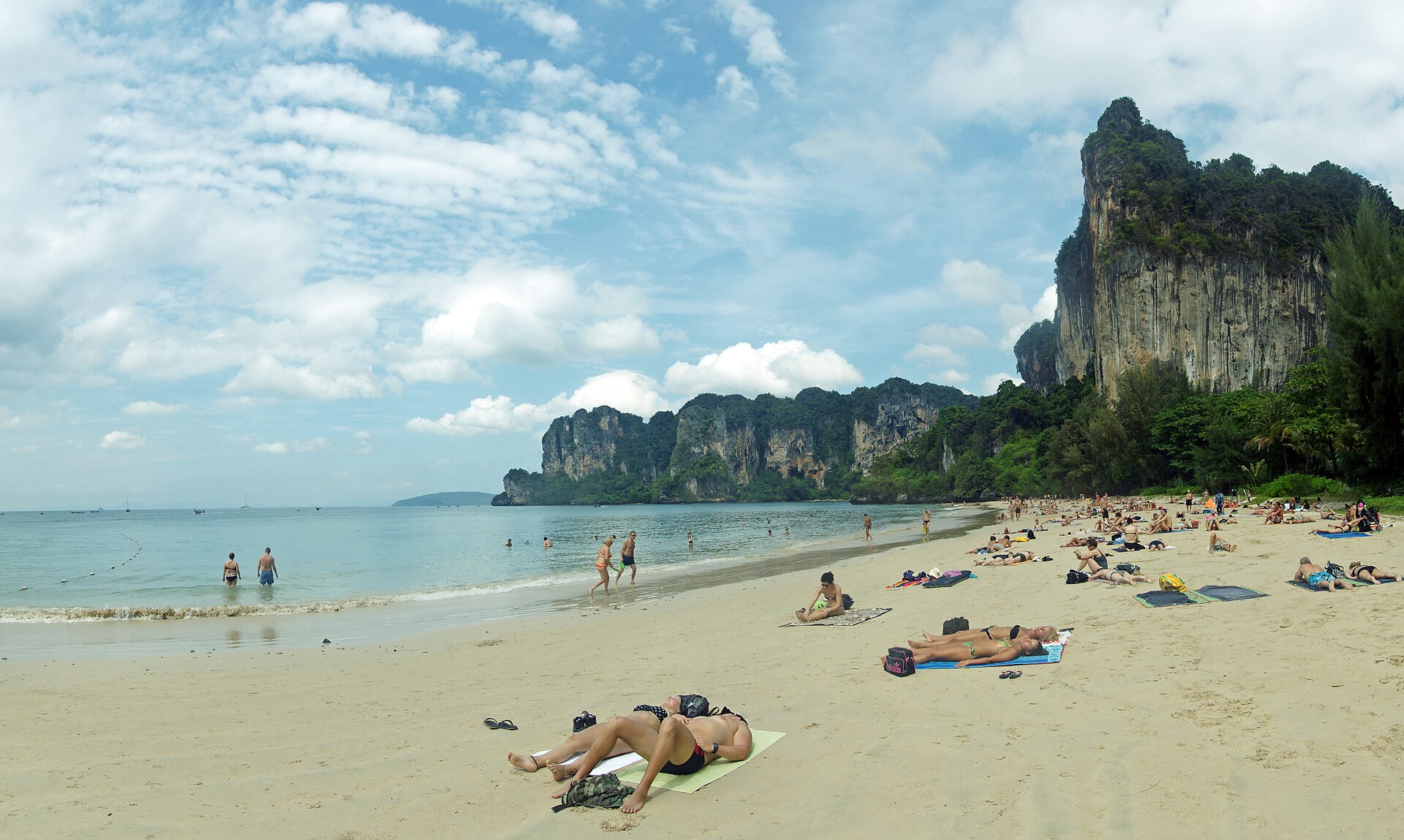
Two famous Thai islands, both with excellent beaches and good resorts. Most comparisons stop at “Phuket is livelier, Samui is more relaxed” — which is true and not very useful.
Here’s the thing that should actually decide it for you: they’re on opposite coasts and have opposite seasons. If you’re travelling in October, that fact matters more than every preference below.
The short version
- Travelling Nov–April? Both work. Choose on preference.
- Travelling July–Sept? Koh Samui — Phuket will be wet.
- Travelling Oct–Nov? Phuket — this is Samui’s wettest stretch.
- First trip, want it easy? Phuket.
- Want a proper tropical-island feeling? Koh Samui.
The seasons — read this first
Phuket is on the Andaman coast. Best November to April. Wet and often rough May to October.
Koh Samui is on the Gulf coast. Best February to April and July to September. Its wettest, roughest months are October and November — precisely when Phuket is coming into its best.
This is why “November to February is the best time to visit Thailand” is dangerous advice applied to a specific island. It’s true for the country and actively wrong for Samui in early November. Full month-by-month guide →
Atmosphere
Koh Samui feels like an island. It’s 25km across, ringed by a single road, and still covered in coconut groves — the interior is jungle and hills rather than development. Bophut’s Fisherman’s Village is a genuinely charming strip of old wooden shophouses; Chaweng is the busy end; the south and west coasts are quiet enough to feel remote.
Phuket is big enough not to feel like an island at all. It’s connected to the mainland by a bridge, it has a proper city (Phuket Town, which is excellent and badly under-visited), an airport with international traffic, malls, hospitals and traffic jams. That’s a criticism and a feature — you can find anything you want.
Koh Samui guide → · Phuket guide →
Beaches
Koh Samui — Chaweng is the long, lively main beach; Lamai is its slightly calmer neighbour; Choeng Mon and Bophut on the north coast are gentle and shallow, which makes them very good with small children. The classic palm-fringed postcard is easy to find here.
Phuket — More beaches and more variation between them, from Patong’s noise to Nai Harn’s calm to Mai Khao’s nine near-empty kilometres. Some of the west-coast beaches have serious rip currents in the low season; take the red flags seriously, as people drown there every year.
Honest call: Samui’s beaches are prettier on average. Phuket’s give you more to choose from.
Nightlife and dining
Phuket by a clear margin. A wide restaurant scene, Phuket Old Town’s Michelin-listed street food, beach clubs, and Bangla Road if that’s what you’re after.
Koh Samui has Chaweng for late nights and Fisherman’s Village for a nice dinner, plus the famous Full Moon Party an hour away on Koh Phangan. Outside those, evenings are quiet.
Families
Phuket has the infrastructure — water parks, aquariums, elephant sanctuaries, big resorts with kids’ clubs, international hospitals, and things to do when it rains.
Koh Samui has the simplicity — a compact island you can drive around in two hours, shallow north-coast beaches, and less to overwhelm you. For families with toddlers who mainly want a pool and a safe beach, Samui is arguably the nicer trip.
Getting there — usually the decider
Phuket has a large international airport with direct flights from across Asia and seasonal long-haul from Europe. Land, transfer, done.
Koh Samui is harder and more expensive. The airport is privately operated with very limited competition, so fares are consistently higher — often ฿2,000–5,000 more than the equivalent Phuket flight. The budget alternative is flying to Surat Thani on the mainland and taking a bus plus ferry, which costs a fraction and takes about five hours door to door.
For a one-week trip, that difference is real. For two weeks, it matters less.
Cost comparison
| Phuket | Koh Samui | |
|---|---|---|
| Flight from Bangkok | ฿1,000–2,500 | ฿3,000–6,500 |
| Mid-range hotel | ฿2,000–4,500 | ฿2,200–5,000 |
| Dinner for two | ฿700–1,800 | ฿800–1,800 |
| Airport transfer | ฿800–1,200 | ฿600–1,000 |
| Scooter hire per day | ฿200–300 | ฿200–300 |
Indicative 2026 guide prices, high season.
Day-to-day costs are close. Getting there is where Samui costs more.
Which to pick
Choose Phuket if: it’s your first Thailand trip · you want variety and options · you’re travelling with young children · you want a short, cheap flight · you’re going November to April · you want to combine with Krabi and Phi Phi.
Choose Koh Samui if: you want a slower, greener island · you’re travelling July to September · you want Koh Phangan and Koh Tao within easy reach · you’ve done Phuket · you value the feeling of being somewhere small.
Can you do both?
Yes, but treat it as a proper travel day. There’s no road between them — you’re looking at a flight of about an hour (sometimes routed via Bangkok) or a bus-and-ferry combination of six to eight hours.
If you have two weeks and want both, our usual suggestion is a week on the Andaman side (Phuket plus Krabi or Phi Phi), a flight across, and a week on the Gulf side (Samui plus a couple of nights on Koh Tao). It works well in either February or March, when both coasts are good — which is a narrower window than most people realise.
Tell us your dates first and your preferences second — with those two things we can tell you which island is actually right, rather than which one sounds nicer.
Plan your island holiday → · Island-hopping guide → · Best time to visit →