Chiang Mai is Thailand at a slower pace and a lower temperature. It was the capital of the independent Lanna kingdom for 500 years before it was Thai at all, and it still feels culturally distinct — different food, different temple architecture, a different dialect, and a mountain rising 1,600 metres directly behind the city.
The old city sits inside a square moat you can walk around in an hour, packed with something like thirty temples, and beyond it the hills start almost immediately.
The temples
Wat Phra That Doi Suthep — The one on the mountain, reached by a 306-step naga staircase (or a funicular if the knees object). A gold-plated chedi, monks chanting, and a view over the whole valley. Go for sunset, or go early to avoid coaches. ฿30 entry, plus the drive up.
Wat Chedi Luang — In the heart of the old city: a vast 15th-century chedi, partially collapsed in an earthquake and left that way, which somehow makes it better. It housed the Emerald Buddha for 80 years before Bangkok took it.
Wat Phra Singh — The old city’s most revered temple, with a beautifully proportioned Lanna-style viharn and gold leaf everywhere.
Wat Umong — Different from all of the above: a forest temple with brick tunnels, a lake, and monks’ aphorisms hung from the trees in English. Quiet, shaded and genuinely peaceful.
The three things people come for
An ethical elephant sanctuary. This is Chiang Mai’s signature experience, and it’s also where the most careful choosing is needed. A genuine sanctuary offers no riding, no painting or performing, no forced bathing sessions, keeps groups small, and lets the elephants walk away from you if they want to. A half day at a good one is unforgettable. A day at a bad one funds something you’d rather not have funded.
A Thai cooking class. Consistently the highest-rated activity on people’s whole Thailand trip. A morning market tour, then four or five dishes you actually cook yourself, then lunch is what you made. ฿1,000–1,500, and you leave able to make a passable green curry at home.
The markets. The Sunday Walking Street on Ratchadamnoen Road is the big one — a kilometre of handicrafts, street food and buskers, and the whole old city comes out. The Saturday Walking Street on Wualai is smaller and, some say, better. The Night Bazaar runs every evening and is more commercial.
Into the mountains
Doi Inthanon — Thailand’s highest peak at 2,565m, about 90 minutes away. The summit itself is unremarkable (a car park and a cloud), but the park around it holds the twin royal pagodas with their formal gardens, the Mae Ya waterfall, Karen villages, and genuinely cold air. A full day.
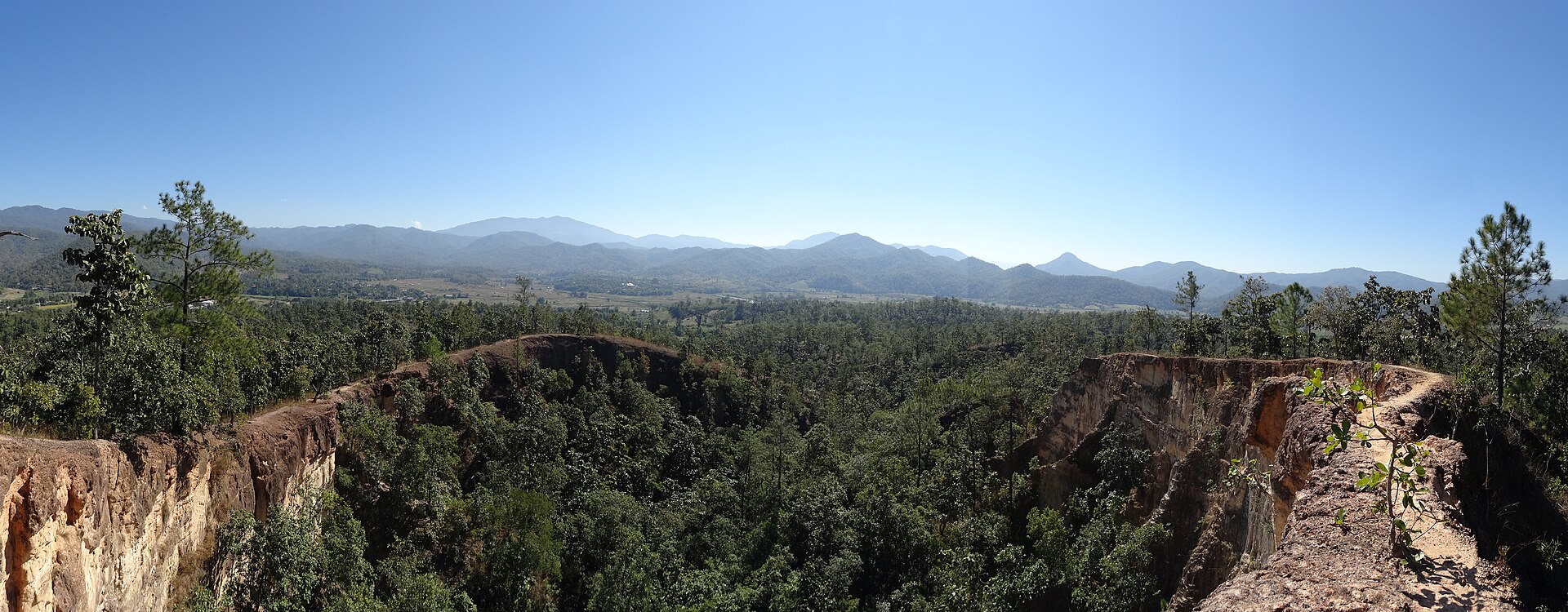
Pai — Three hours north on a road with 762 numbered curves, and a completely different place: a small mountain town, hot springs, a canyon, and a long-standing traveller scene. Best as an overnight, not a day trip. Pai guide →
Trekking, waterfalls and hill villages fill the areas north and west of the city, and are usually done as day trips with a driver or guide.
Practical notes
- The burning season is real. From roughly late February to April, agricultural burning fills the valley with smoke and air quality can become among the worst measured anywhere. If you’re sensitive to air quality, come November to January.
- It’s genuinely cool in December and January — 12–15°C at night, and colder up the mountain. Bring a jacket, which visitors never expect to need in Thailand.
- The old city is walkable; everything else isn’t. Songthaews (฿30–50) and Grab cover the city. Mountain trips need a driver.
- Loy Krathong and Yi Peng fall in November and Chiang Mai is the best place in the country to see them — floating lanterns, river offerings, and hotel prices to match. Book far ahead.
Make it easy
Mountain roads, scattered temples and sanctuaries an hour out of town are all far easier with a driver who knows the routes — particularly Doi Inthanon, which is a long winding day in the hills.
Van and driver hire → · Tailor-made tours → · 10-day first-timer itinerary → · Plan your Chiang Mai trip →